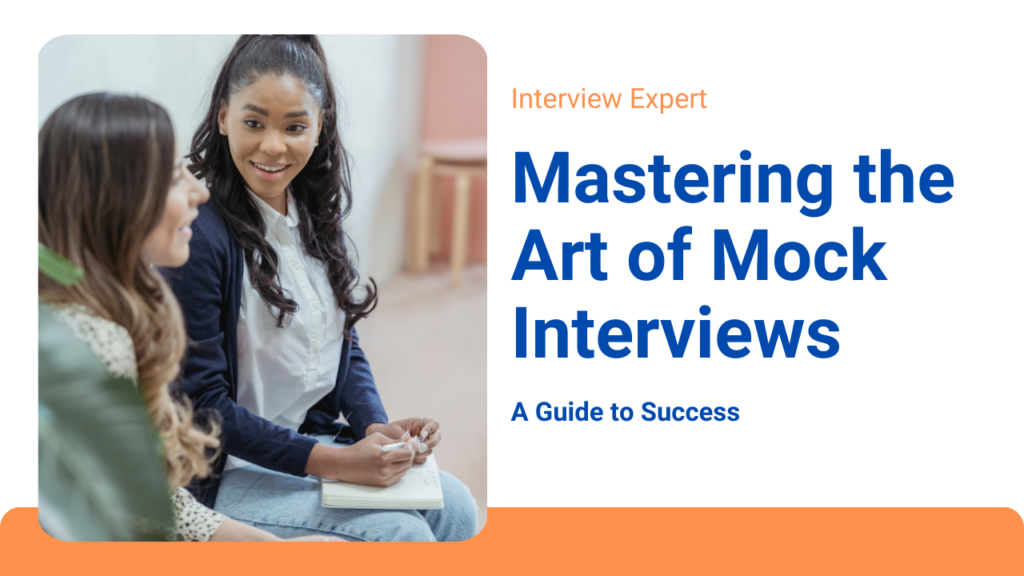

In today’s competitive job market, securing a desired position requires more than a well-crafted resume and a solid educational background. Interviewing skills are critical in landing a job, as interviews allow employers to assess a candidate’s qualifications, interpersonal skills, and cultural fit within the organization. However, many job seekers find interviews to be nerve-wracking and stressful, negatively impacting their performance. This is where mock interviews come into play. Mock interviews are simulated practice interviews designed to mirror real-life interview scenarios, providing candidates a valuable opportunity to refine their skills and build confidence. This article explores the importance of mock interviews, how they are conducted, and their benefits in preparing candidates for successful job interviews.
Understanding Mock Interviews
Mock interviews are practice interviews conducted in a controlled environment, often by career counselors, mentors, or experienced professionals who simulate the role of the interviewer. The structure of a mock interview is typically similar to an actual job interview, including a series of questions designed to assess the candidate’s qualifications, experience, problem-solving abilities, and interpersonal skills. These interviews can be conducted in person, over the phone, or via video conferencing platforms, depending on the job seeker’s preferences and the nature of the position they are preparing for.
The primary goal of a mock interview is to provide candidates with constructive feedback on their performance, helping them identify areas for improvement. Interviewers may focus on various aspects, such as the candidate’s responses to questions, body language, communication style, and overall presentation. By simulating an actual interview, candidates can practice responding to challenging questions, managing stress, and improving their ability to articulate their thoughts clearly and concisely.
The Role of Mock Interviews in Reducing Anxiety
One of the most significant benefits of mock interviews is their ability to reduce interview anxiety. For many job seekers, the pressure of performing well during an interview can lead to nervousness, hindering their ability to think clearly and respond effectively. Mock interviews help candidates become more familiar with the interview process, making it less intimidating. By practicing in a low-stakes environment, candidates can build confidence in their abilities and develop strategies to manage stress during the interview.
Research has shown that repeated exposure to stressful situations can desensitize individuals to anxiety-inducing stimuli. In the context of interviews, the more a candidate practices through mock interviews, the less anxious they are likely to feel during the actual interview. This anxiety reduction can lead to improved performance, as candidates can better focus on the content of their responses rather than their nervousness.
Improving Communication and Presentation Skills
Effective communication is a critical component of a successful interview. Employers are interested in candidates’ qualifications and how well they can articulate their thoughts, convey ideas, and engage in meaningful conversations. Mock interviews allow candidates to hone their communication skills, ensuring that they can present themselves clearly, concisely, and confidently.
During a mock interview, candidates can practice answering common interview questions, such as “Tell me about yourself,” “What are your strengths and weaknesses?” and “Why do you want to work for our company?” By rehearsing these responses, candidates can refine their answers, ensuring they are informative and compelling. Additionally, mock interviews allow candidates to practice responding to behavioral and situational questions, often requiring them to provide specific examples from their past experiences.
Another important aspect of communication is non-verbal cues, such as body language, eye contact, and facial expressions. Mock interviews provide valuable feedback on these non-verbal aspects of communication, helping candidates become more aware of how they present themselves. For example, candidates may learn to avoid fidgeting, maintain appropriate eye contact, and project confidence through their posture and gestures. These improvements in communication and presentation can significantly enhance a candidate’s overall impression during an interview.
Tailoring Responses to Different Types of Interviews
Job interviews take various forms, including behavioral interviews, technical interviews, panel interviews, and case interviews. Each type of interview requires a different approach, and mock interviews can be tailored to help candidates prepare for the specific format they are likely to encounter.
For example, in a behavioral interview, candidates are often asked to provide examples of handling specific situations. The STAR method (Situation, Task, Action, Result) is a common framework for structuring responses to behavioral questions. Through mock interviews, candidates can practice using the STAR method to provide concise and well-organized answers, ensuring they effectively communicate their problem-solving abilities and past successes.
In technical interviews, candidates are typically asked to demonstrate their knowledge and skills in a specific area, such as coding, engineering, or finance. Mock technical interviews allow candidates to practice solving problems on the spot, explaining their thought processes, and handling any unexpected challenges. This practice can be especially beneficial for candidates applying for positions where technical expertise is critical to the job.
Panel interviews, in which candidates are interviewed by multiple people simultaneously, can be particularly intimidating. Mock panel interviews help candidates develop strategies for managing various interviewers, such as addressing each interviewer’s questions individually, maintaining eye contact with all participants, and balancing their attention across the panel.
By tailoring mock interviews to the specific type of interview a candidate is preparing for, they can gain valuable experience and confidence, ultimately improving their performance during the actual interview.
Receiving Constructive Feedback and Identifying Areas for Improvement
One of the most valuable aspects of a mock interview is the constructive feedback provided by the interviewer. After the mock interview, the interviewer typically offers detailed feedback on the candidate’s performance, highlighting strengths and areas for improvement. This feedback is crucial for helping candidates refine their interview skills and make the necessary adjustments before their actual interview.
For example, candidates may receive feedback on the clarity and relevance of their responses, their ability to stay on topic, or their use of specific examples to support their answers. Additionally, the interviewer may provide insights into the candidate’s body language, tone of voice, and overall demeanor. By receiving this feedback in a supportive and non-judgmental environment, candidates can identify weaknesses and work on improving them.
Candidates should approach mock interviews with an open mind and a willingness to learn. Constructive criticism can be challenging, but it is essential to the growth process. By embracing the feedback provided during a mock interview, candidates can make meaningful improvements that increase their chances of success in the actual interview.
Building Confidence Through Repetition
Confidence is a critical factor in interview success, and mock interviews play a crucial role in building that confidence. The more a candidate practices through mock interviews, the more comfortable they become with the interview process. This comfort translates into increased self-assurance during the interview, allowing candidates to present themselves more effectively and make a positive impression on potential employers.
Repetition is a powerful tool for building confidence. By engaging in multiple mock interviews, candidates can reinforce their knowledge, refine their responses, and develop a sense of mastery over the interview process. This repetition helps to reduce the fear of the unknown, as candidates become more familiar with the types of questions they may be asked and interviewers’ expectations.
In addition to building confidence in their interview skills, candidates may gain greater confidence in their qualifications and abilities. By practicing articulating their achievements and experiences, candidates can develop a stronger belief in their value as potential employees. This increased self-confidence can be a significant advantage during the interview, allowing candidates to present themselves with conviction and enthusiasm.
Conclusion: The Lasting Impact of Mock Interviews
Mock interviews are a powerful tool for career preparation, offering numerous benefits beyond the immediate interview experience. By reducing anxiety, improving communication and presentation skills, tailoring responses to different types of interviews, receiving constructive feedback, and building confidence through repetition, candidates can significantly enhance their chances of success in the job market.
The skills and insights gained through mock interviews are valuable for the job search process and long-term career development. Effective communication, problem-solving, and self-presentation are essential skills in any professional setting, and the practice provided by mock interviews can contribute to a candidate’s overall growth and success.
In today’s competitive job market, securing a desired position requires more than a well-crafted resume and a solid educational background. Interviewing skills are critical in landing a job, as interviews allow employers to assess a candidate’s qualifications, interpersonal skills, and cultural fit within the organization. However, many job seekers find interviews to be nerve-wracking and stressful, negatively impacting their performance. This is where mock interviews come into play. Mock interviews are simulated practice interviews designed to mirror real-life interview scenarios, providing candidates a valuable opportunity to refine their skills and build confidence.
In conclusion, mock interviews are an invaluable resource for job seekers. They provide a safe and supportive environment for honing interview skills and building the confidence needed to excel in real interviews. By taking advantage of mock interview opportunities, candidates can better prepare themselves for the challenges of the job market and increase their likelihood of securing their desired positions.